What is Content Marketing?
The first step of excelling in your content marketing efforts starts with defining what is content marketing. According to the Content Marketing Institute,
“Content marketing is the strategic marketing approach of creating and distributing valuable, relevant and consistent content to attract and acquire a clearly defined audience – with the objective of driving profitable customer action.”
Now, let’s break that definition into logical classes:
a. A Strategic Marketing Approach:
Marketing in itself is a strategic function to your business, without which the entire process of lead generation would become ineffective. Many marketers believe that content marketing is a subset of digital marketing or maybe just another insignificant piece of the entire digital marketing puzzle. The truth is far from that.
Content marketing does not start or end with a blog post or a newsletter. Your content marketing efforts have to sit in tandem with your business strategy. For instance, ask a few starter questions – is your audience making big-ticket purchases that require deliberate decision? Or, are you providing a product or set of services that are new to your target audience?
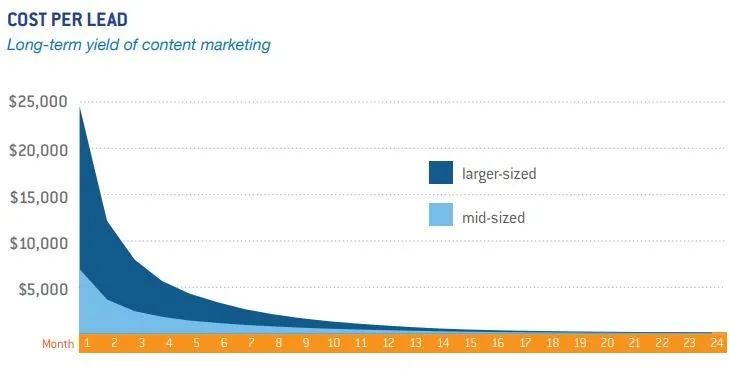
If your strategy is to get the current batch of products off the shelves and move on to the next one – content marketing may not be the right fit for you. Like all other business strategies, it can take anywhere between a few months to a year for it to show tangible results. One thing, though, is assured – if executed properly, content marketing can give you tremendous ROI.
On the other hand, if you are trying to build market leadership or garner the attention of your target audience or build strong moats for your business that will drive up the value of your company – content marketing can be of immense help. So, your content marketing efforts would directly reflect the growth strategy you are adapting as a business.
b. Creating and Distributing Valuable, Relevant and Consistent Content:
This is exactly the point where most marketers slip. Hence, it calls for a more microscopic explanation.
To get started with understanding this part of the definition, understand this – you have to create and distribute content. So, in order to excel at content marketing, you should be able to produce content. In addition to creating your own content, you can also push content that has been produced by third parties which you are allowed to share. The only caveats with creating and curating content are that you should be distributing the content and that it should add value.
This means, that you cannot put up your content in someone else’s marketing communication channel. It is highly recommended that you put up content through your own communication channels. Why? Because this way you are creating media properties that will keep generating value for you even in the future. In addition to that, your goal to generate opinion leadership in your industry also gets fulfilled when you distribute content using your own communication channels.
The next critical part of the content marketing equation is defining the term – valuable content. Every other part can be debated upon, bent for convenience or might have exceptions; every other part, except the term valuable content. Hence, how you define ‘valuable content’ can make or break your content marketing plans. If you are able to get this part correct, all your content marketing efforts will naturally work out.
Valuable content for your audience would mean everything that adds to their knowledge about your offerings, your industry’s offerings and other ancillary information they need to make their lives better. A simple way of ensuring that you are maintaining the line between content marketing and advertising is simple – content marketing is based on all the pain points your customers have, irrespective of whether your specific products can solve them all or not.
When you focus on content that is solving your customers’ pain points or even pointing them in the right direction, without necessarily serving your own purposes, you are creating valuable content for them. If the content provides value to your customers, it will naturally make them associate your brand with reliability and help you generate brand equity.
The fact that this brand equity eventually translates into business growth can be known from the fact that on the date of publishing this blog (February 2019), HubSpot’s share price had touched $166 apiece from $32 apiece, three years ago. HubSpot is known to have created a lot of content around digital marketing to educate its audience; so much so, that many people in the industry associate HubSpot first as an education platform and then as a software company.
Once you have mapped out the pain points of your target audience and produced content that helps them solve these pain points, your content becomes naturally relevant to them. Now, all you have to do is ensure you are regular with producing your content and you would’ve taken care of the very initial steps necessary for successful content marketing.
c. Attracting and Acquiring a Clearly Defined Audience for Business Purposes:
This, the last part of the definition, is the one where value creation attributable to content marketing goes out of the park.
When you sit down to build a content marketing strategy, you will find a ton of data about your target audience. For instance, let’s suppose that you are an ERP system developing company that helps hedge funds keep a track of their investments. Now, the problems of an every-day hedge fund manager are immense and quite nuanced. You may or may not be able to solve all of them as a technology provider. So, what you start doing is mapping out the most important pain points, like something which is critical to the very existence of their business. Once you have the top three or four pain points, you produce content which helps them get rid of it or at least take a step towards getting rid of it.
In accordance with our example, this can include how they can perform better investment research, hire better portfolio managers, look for better quantitative technology or attend new conferences to meet institutional investors. Just about everything under the sky that will help your target audience have a better life – mould it into an original voice and you are ready to get started with producing content.
When you produce such content, you are bound to attract a relevant audience. The number of visitors to your website may not quadruple overnight because not all traffic on the website is relevant, but there will be an increase in relevant traffic if you produce and promote your content.
The question is – what do you do once the user has reached your website or point of sale and has consumed the pieces of content you produced? This is where creating a user journey comes into the picture. A user journey will help you transcend from attracting traffic to acquiring customers. The next part can actually be streamlined because it is more marketing-centric than knowledge centric.
You now know what are the pain points of your customers; so now you position yourself in the areas where you have your offerings and show them how your products or services solve their problems. You show them how your offerings are different from those available in the market. The sub-conscious advantage you have here is that since you started your interaction with them as a solution provider and not as a salesman, you will have the position of a problem solver or a consultant in their minds and that puts you in the sweet spot of pitching your offerings with grace.
This establishes one critical point about content marketing – no matter how well you try to measure the impact you have created with your content marketing efforts, it will all come down to how much incremental business you have been able to generate because of it. This is where we come to a full circle – content marketing started as an effort that has to be cohesive with your strategy and at the end of it all, it has to perform in terms of generating business, just like your strategy.